
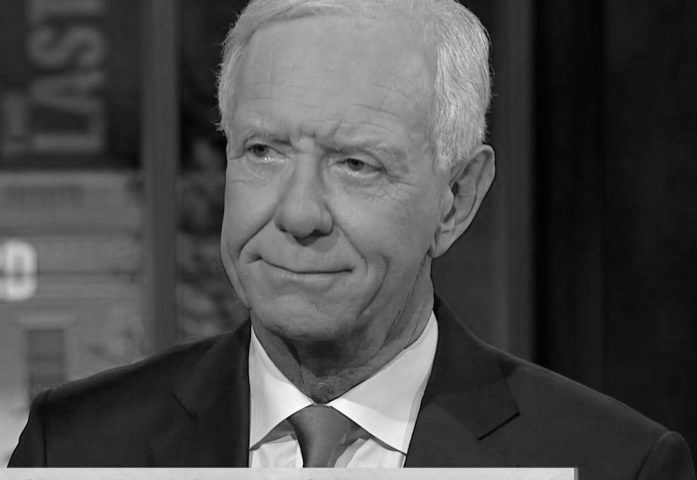
January 15, 2009, 3:27 PM: US Airways Flight 1549 hits a flock of geese at 2,800 feet. Both engines fail instantly. Captain Chesley “Sully” Sullenberger has 208 seconds to decide where 155 lives go—including his own.
His heart rate: 155 bpm. His adrenaline: flooding. His amygdala: screaming to react.
Instead, he responds. He runs trained protocols. He evaluates options. He executes a water landing that aviation experts called impossible.
Result: 155 lives saved. A hero’s welcome. A movie about his life.
August 9, 2010, 12:48 PM: JetBlue flight attendant Steven Slater gets disrespected by a passenger. A rude comment. A dismissive attitude.
His heart rate: 145 bpm. His adrenaline: flooding. His amygdala: screaming to react.
He reacts. He curses over the intercom. He grabs two beers. He deploys the emergency slide and slides into unemployment—and criminal charges.
Result: Career destroyed. Pension gone. Legal fees exceeding $100,000.
Both men faced stress. Both felt the physiological surge. One responded. One reacted.
The difference? That’s not metaphorical—it’s neurological. And it’s costing you far more than you realize.
The 0.037 Second Hijacking
Dr. Joseph LeDoux’s research mapped exactly what happens when you react:
The Amygdala Fast Track:
- Sensory input hits thalamus: 12 milliseconds
- Thalamus signals amygdala: 25 milliseconds
- Amygdala triggers response: 0.037 seconds total
- Conscious awareness arrives: 0.5 seconds later
You’ve already reacted before you know what happened.
The chemical cascade that follows:
- Adrenaline floods in 0.07 seconds
- Cortisol follows in 2 seconds
- Rational thought suppressed for 20 minutes
- Full recovery: 60-90 minutes
One reaction creates 90 minutes of compromised judgment.
Here’s the devastating part: Stanford research shows that reactions use the same neural pathway every time—literally a groove in your brain. The more you react, the deeper the groove, the more automatic the reaction becomes.
You’re Out of Control 95% of the Day
MIT studied 10,000 people’s daily behavior and found something unsettling:
What people believe:
- “I chose to get angry”
- “I decided to eat that”
- “I meant to say that”
What brain scans show:
- Decision made 0.35 seconds before awareness
- Emotional reaction complete before cognition
- 95% of behavior unconscious
- Free will engaged: 5% of decisions
We’re passengers believing we’re drivers.
The Cost of Reaction Living
Relationships: The 91% Divorce Rate
Dr. John Gottman’s analysis of 3,000 couples revealed the reaction death spiral:
Reaction-Driven Relationships:
- Criticism triggers defensiveness (0.3 seconds)
- Defensiveness triggers contempt (0.5 seconds)
- Contempt triggers stonewalling (2 seconds)
- Cycle repeats automatically
- Divorce rate: 91%
Response-Driven Relationships:
- Pause before speaking (2-second rule)
- Choose response deliberately
- Break automatic patterns
- Divorce rate: 9%
Same conflicts. Different neural pathways. 10x different outcomes.
Money: The $18,000 Annual Reaction Tax
Behavioral economics research on financial reactions:
Reaction-Based Decisions:
- Panic selling in market drops
- Impulse buying: $5,400 annually per American
- Emotional investing: 5.2% lower returns
- Revenge spending: 73% end up in credit card debt
Response-Based Decisions:
- Systematic investing: 9.2% average returns
- Planned purchases: 45% less spending
- Strategic allocation: Outperform by 3.7%
Reactions cost the average family $18,000 annually.
Your Brain When Reacting
Harvard Medical School mapped what happens to your capabilities:
When in Reaction Mode:
- IQ drops 13-23 points temporarily
- Field of vision narrows 70%
- Memory formation impairs
- Time perception distorts
You’re literally dumber, blinder, and less capable when reacting.
The Five Reaction Types
Psychology research identifies five universal reaction patterns. Each person has a dominant one that runs their life without awareness:
- Fight (Attack) – 32% of reactions
Verbal aggression, blame, criticism - Flight (Escape) – 28% of reactions
Avoidance, distraction, procrastination - Freeze (Paralysis) – 18% of reactions
Indecision, numbness, dissociation - Fawn (People-please) – 15% of reactions
Over-apologizing, self-sacrifice, codependence - Flop (Collapse) – 7% of reactions
Learned helplessness, depression, giving up
Which one hijacks you most often?
How Navy SEALs Override Reactions
Elite forces train to convert reactions into responses:
4-4-4-4 Breathing
- Inhale 4 seconds
- Hold 4 seconds
- Exhale 4 seconds
- Hold 4 seconds
Results:
- Interrupts amygdala hijack
- Activates parasympathetic system
- Creates response window
- Decision accuracy improves 24%
OODA Loop
- Observe: What’s happening?
- Orient: What does it mean?
- Decide: What’s the best response?
- Act: Execute decision
Converting reaction (0.5 seconds) to response (2 seconds) creates 340% outcome improvement.
The 90-Second Rule
Dr. Daniel Siegel’s “Sacred Pause” research:
The neurochemical fact: Emotions last 90 seconds chemically. After 90 seconds, you’re choosing to continue the emotion.
The implication: Pause for 90 seconds = regain control.
The STOP Method
S – Stop what you’re doing
T – Take a breath
O – Observe thoughts and feelings
P – Proceed with intention
People using STOP: 52% fewer regrettable actions.
The Smartphone Reaction Crisis
Your phone has turned you into a reaction machine:
Average smartphone user:
- 96 notifications daily
- Checks phone 144 times
- Reacts within 3 minutes (64% of time)
- Never regains deep focus
Each notification triggers:
- Dopamine spike
- Attention shift
- Cortisol increase
- 23 minutes to refocus
Result: Perpetual reaction state. Zero control.
Social media platforms engineer this deliberately:
- Intermittent variable rewards (slot machine psychology)
- Outrage amplification (3x more engagement)
- FOMO triggers
- Social comparison
Users spend 147 minutes daily in engineered reactions.
Breaking the Reaction Chain
The Choice Point Method
Dr. Russ Harris’s ACT approach for every trigger:
- Notice – “I’m at a choice point”
- Name – “Anger/fear/hurt is arising”
- Neutralize – Deep breath, ground yourself
- Navigate – Choose response aligned with values
Success rate: Moving from 5% conscious choice to 45% in 30 days.
Pre-Loading Responses
Mental contrasting research shows If-Then planning works:
- “If criticized, then I’ll pause and ask for specifics”
- “If triggered, then I’ll take three breaths”
- “If angry, then I’ll excuse myself for 5 minutes”
Pre-loaded responses: 73% execution rate
Unprepared reactions: 92% default pattern
The Ultimate Question
Viktor Frankl, who survived Nazi death camps, wrote: “Between stimulus and response there is a space. In that space is our power to choose our response. In our choices lie our growth and our freedom.”
The space exists. It’s just 0.037 to 2 seconds long.
Captain Sully found that space at 2,800 feet with both engines gone. He chose response over reaction.
Steven Slater lost that space in a moment of frustration. He chose reaction over response.
The outcomes speak for themselves.
Your life is the sum of your responses minus your reactions. Every day offers hundreds of choice points—moments where stimulus meets you and you decide: reaction or response?
Reactions happen TO you. They’re automatic, unconscious, out of your control.
Responses happen THROUGH you. They’re chosen, conscious, aligned with who you want to be.
The question isn’t whether you’ll face triggers today. You will.
The question is: When they arrive, will you react or respond?
Will you be Sully or Slater?
The space is there. The choice is yours.
Understanding that reactions by definition are out of control—and learning to create the space for intentional response—is one of the foundational axioms we explore in depth with Intentional Achievers™ PRO members. Because reclaiming control begins with recognizing when you’ve lost it.