
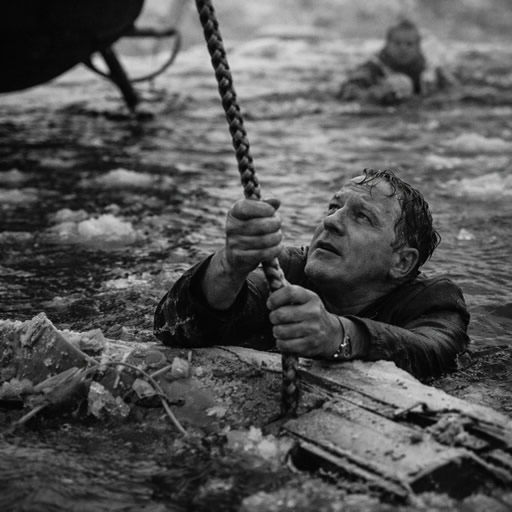
The rope came down from the helicopter.
He caught it.
The icy river was swallowing what remained of the wreckage. The plane had hit the bridge and plunged into the freezing water. Survivors clung to debris. The current pulled at everything.
Rescue teams worked quickly. One by one, they lowered a line.
He grabbed it.
And then he passed it to someone else.
The helicopter pulled the first survivor to safety. The rope came back down.
He caught it again.
And passed it to someone else.
Again.
And again.
Each time the line descended, it landed in his hands. Each time, he gave it away.
The water was numbing. The wreckage was unstable. Time was shrinking.
There were no speeches.
No discussion.
No negotiation.
Just a decision repeated in seconds.
When the rope came down the final time, the helicopter lifted the last survivor. He was left alone, clinging to debris in the freezing Potomac River.
Moments later, he disappeared beneath the surface.
His name was Arland Williams Jr.
In January 1982, Air Florida Flight 90 crashed into the Potomac River during a snowstorm in Washington, D.C. Survivors were stranded in icy water as a rescue helicopter arrived overhead.
Arland Williams had multiple opportunities to save himself.
He chose otherwise.
His story reveals something simple and uncomfortable.
Sacrifice is not theoretical.
It isn’t abstract.
It isn’t inspirational in the moment.
It is a choice—made repeatedly—when self-preservation feels justified.
Williams did not hesitate because he lacked instinct. He hesitated because he had decided something else mattered more.
Most people believe sacrifice happens once. In reality, it often happens in succession. One decision. Then another. Then another—each harder than the last.
The rope did not appear once.
It appeared several times.
Each time, he had to decide again.
This principle extends beyond extreme moments.
In leadership, sacrifice rarely looks dramatic. It looks like giving credit away. Taking responsibility publicly. Absorbing pressure privately. Choosing the long-term good of the team over short-term recognition.
In business, leaders say “people first” until profitability tightens. In life, individuals say “family first” until convenience shifts.
Sacrifice tests alignment.
It asks: What truly comes first?
Arland Williams did not calculate legacy. He did not anticipate recognition. He responded according to who he was in that moment.
The measure of leadership is not what we claim to value.
It is what we protect when cost appears.
Williams’ action was not impulsive. It was consistent. Every time the rope descended, he aligned his behavior with the same internal decision.
That repetition is what defines character.
Sacrifice without bitterness.
Responsibility without applause.
Action without hesitation.
After his death, President Reagan honored him publicly. But by then, the defining moment had already passed—quietly, without witness, in freezing water.
We rarely face life-and-death choices.
But we regularly face moments where something valuable must be surrendered for something greater.
Time.
Credit.
Comfort.
Control.
The rope comes down in different forms.
The question is whether we hold it—or pass it.
Which leaves us with this:
When the opportunity to save yourself is in your hands,
Do you secure your own safety…
Or do you choose someone else first?